
Comfrey connections
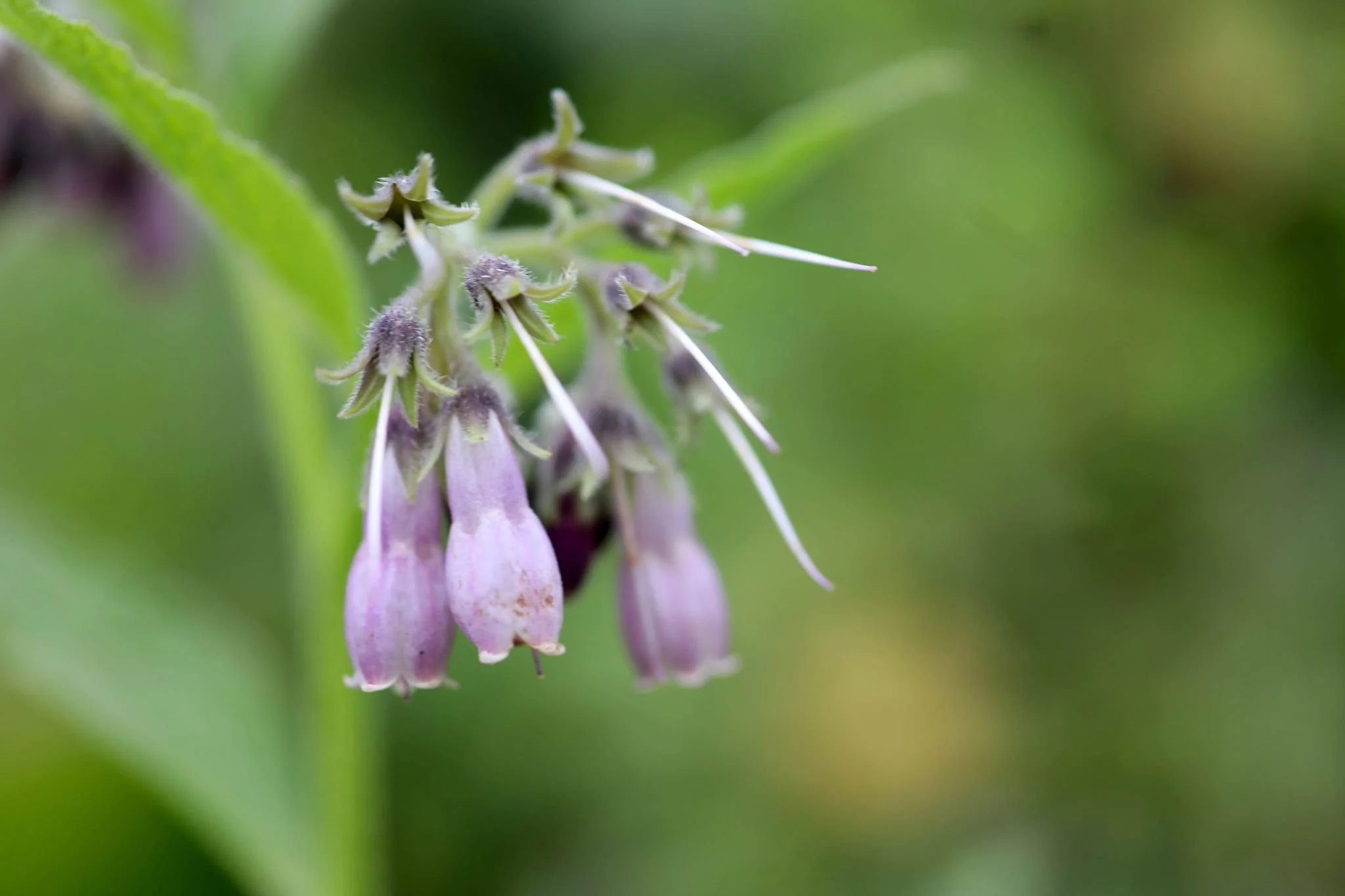
I’m sitting in the garden cleaning, scraping and chopping some Comfrey root. It's hot, and I’m under the shade of the tree.
The comfrey root comes from Wales. Chrissy, a friend of mine, wants some joint and muscle rub. She needs a year’s worth, and all her mates want some too, so she sends me some comfrey root. A big bag full, dug up from the soil where she lives in southwest Wales, by Sami, a mutual friend.
It’s journeyed north to me and has been handed over to my partner Pete in a carrier bag at a funeral in Manchester.
The comfrey root has had quite a journey and is finally here in my garden, with instructions on what’s needed by whom.
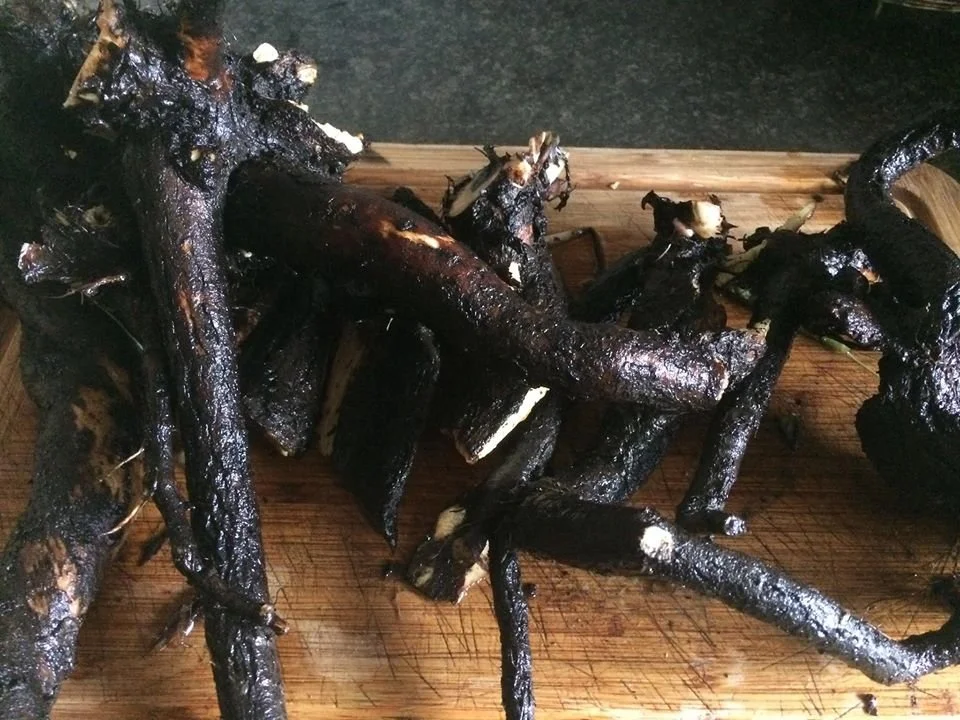
I like to make my own comfrey cream base. I can buy some, but it never seems to work as well, and I need a cream thick enough to hold all the tincture and essential oils without it getting too thin. I also like to connect with the plants and the process of making a medicine, if I can, and there is a lovely energy in connection that is powerful.
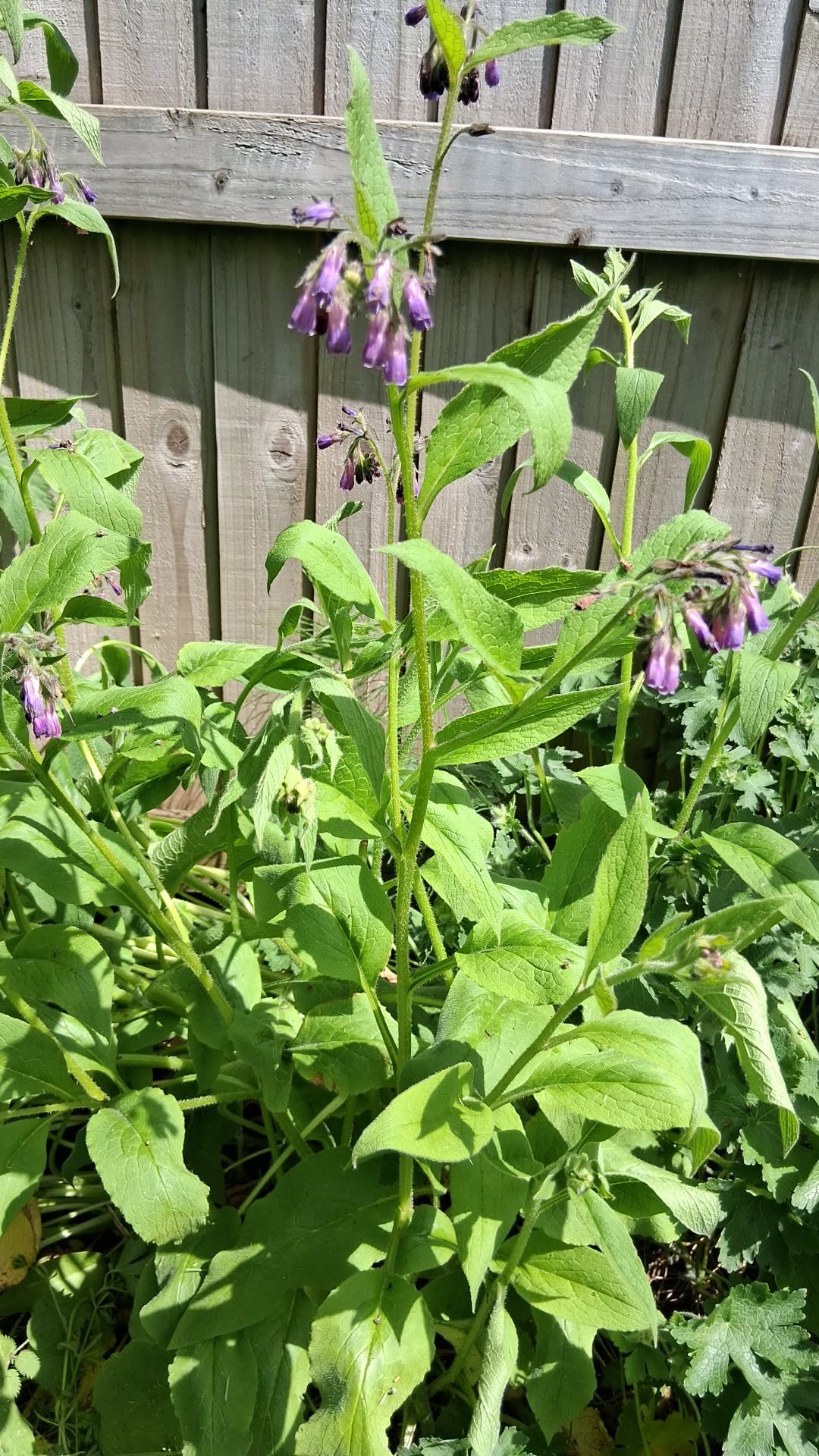
I have lots of comfrey leaf as it’s in abundance here on the lane, but it’s the wrong time of the year for the root. Sami was digging up comfrey anyway.
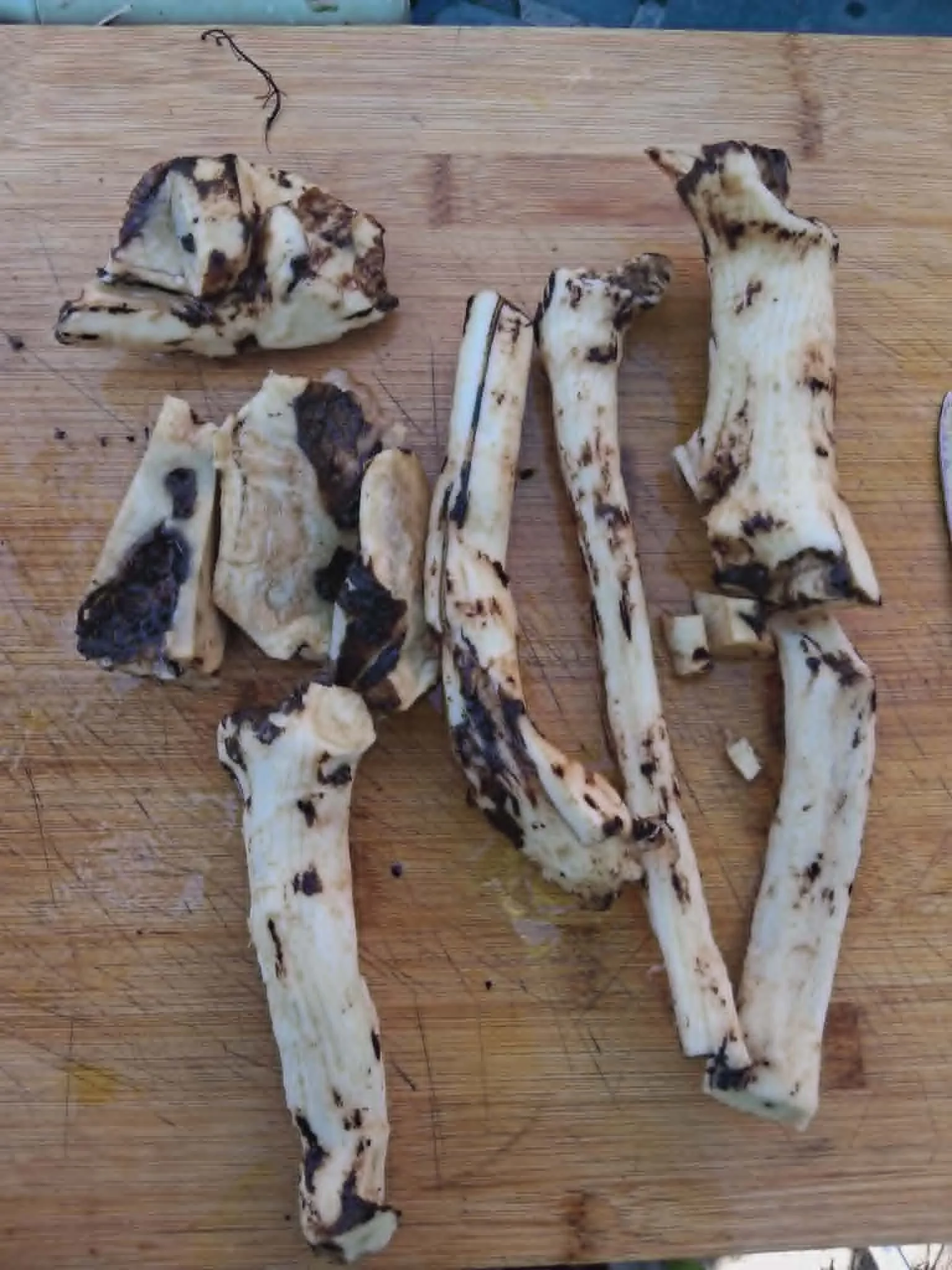
It’s taken me a while to prepare the Welsh comfrey, and soon I have a chopping board full of roots. They look like bone. The right colour and sometimes shape. Some of them are even hollow. A root that tells me exactly what it’s used for, as the old name is Knitbone, and it is very bone-like.
Comfrey (Symphytum officinale) is excellent for healing broken or injured bones, reducing inflammation and pain. It contains a compound called Allantoin, which is responsible for its remarkable cell-proliferation properties and helps promote the rapid production of collagen, connective tissue, cartilage, and bone, speeding up injury repair.
It’s good to use when healing takes longer than it should, and tissue is traumatised. It can also be used to reduce pain from arthritis, stiff and inflamed muscles, sprains and strains.
American Herbalist Matthew Woodfeels that Comfrey works not only through the action of Allantoin but also by increasing fluid movement around a joint (which lies beyond normal circulation), thereby helping with tissue regeneration.
The root feels very mucilaginous to touch, and my hands feel a little gloopy with the preparation. It’s the mucilage that is so soothing to the lungs and the digestive tract, which is what it’s been used for traditionally, too.
Comfrey has so many amazing uses that I could write a whole article on this, but I won’t today because I’m making cream for Chrissy.
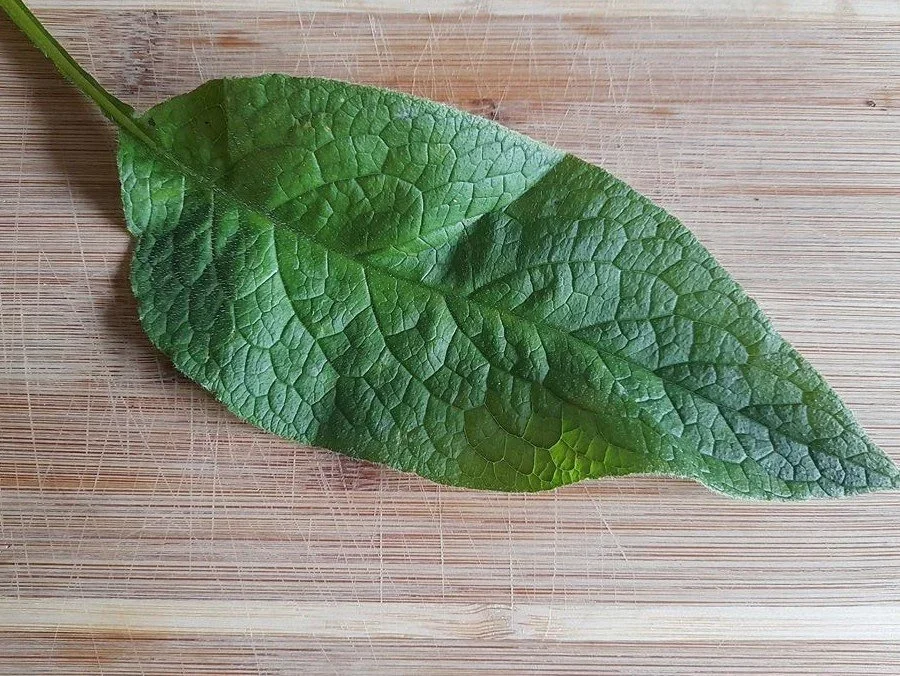
The oil has already been made. I made that last weekend by infusing wilted comfrey leaves in oil. I made a double infusion to make it extra strong, and it’s a gorgeous green colour. It took me all afternoon to make, and now it smells fresh and reminiscent of cucumber.
Now all I need is a strong infusion of the root to add to make a water-based cream.
The chopped root is simmered in water until it’s soft, then mashed and put through a jelly bag. It’s very gloopy and feels thick. Perfect.
Making creams is tricky, and there is an art to it. First, I infuse the comfrey oil with an equal amount of emulsifying wax, then let it melt and set it aside. The strained liquid has been heated too and left to cool a bit. The trick is to get them both to a hot-hand temperature and bring them to the same temperature before blending.

Then the magic begins as the hot-water infusion from the infused root is poured into the food processor, which is then set to slow speed. I add the oil part very slowly as it spins. Just like when making mayonnaise. It always feels like alchemy to see a white healing cream whipped up. It’s Lovely.
Once the eco-preservative is added to keep it from going off and give it a year’s shelf life, I cover it up.
Tomorrow, tinctures and essential oils will be added before it’s put in sterilised jars and posted to back Wales to be rubbed on sore backs, arthritic joints and pulled muscles. It works a treat.
The medicine is not just about allantion, mucilage and the healing constituents of Comfrey. It's the medicine of relationships, connection, the land, the plants themselves and their preparation, the process of making the medicine. A slow, methodical process done with love, intention, and care.
This is all part of the medicine. It’s why I like to do this work.
Thanks for reading this blog.
We hope you have enjoyed all the work and sharing on this website. Danielle and I have run it for the last 6 years as part of our online course. Wild medicine tribe online has finished, as we are both passionate about other ventures. Daneille has opened an amazing dispensary in Barnoldswick, Lancashire, and I am focusing on more face-to-face workshops and writing. The website will be closing down in September.
You can still keep up to date with Earth-based and herbal writing on Substack.
Wild Medicine Tribe | Substack, please subscribe to receive regular emails from Edwina
or follow us on our websites edwinahodkinsonherbalist.co.uk and Danielle Kay Medical Herbalist | Pendle Witch | Barnoldswick, UK
